Knowledge base
Turbo, fuel and EGT explained
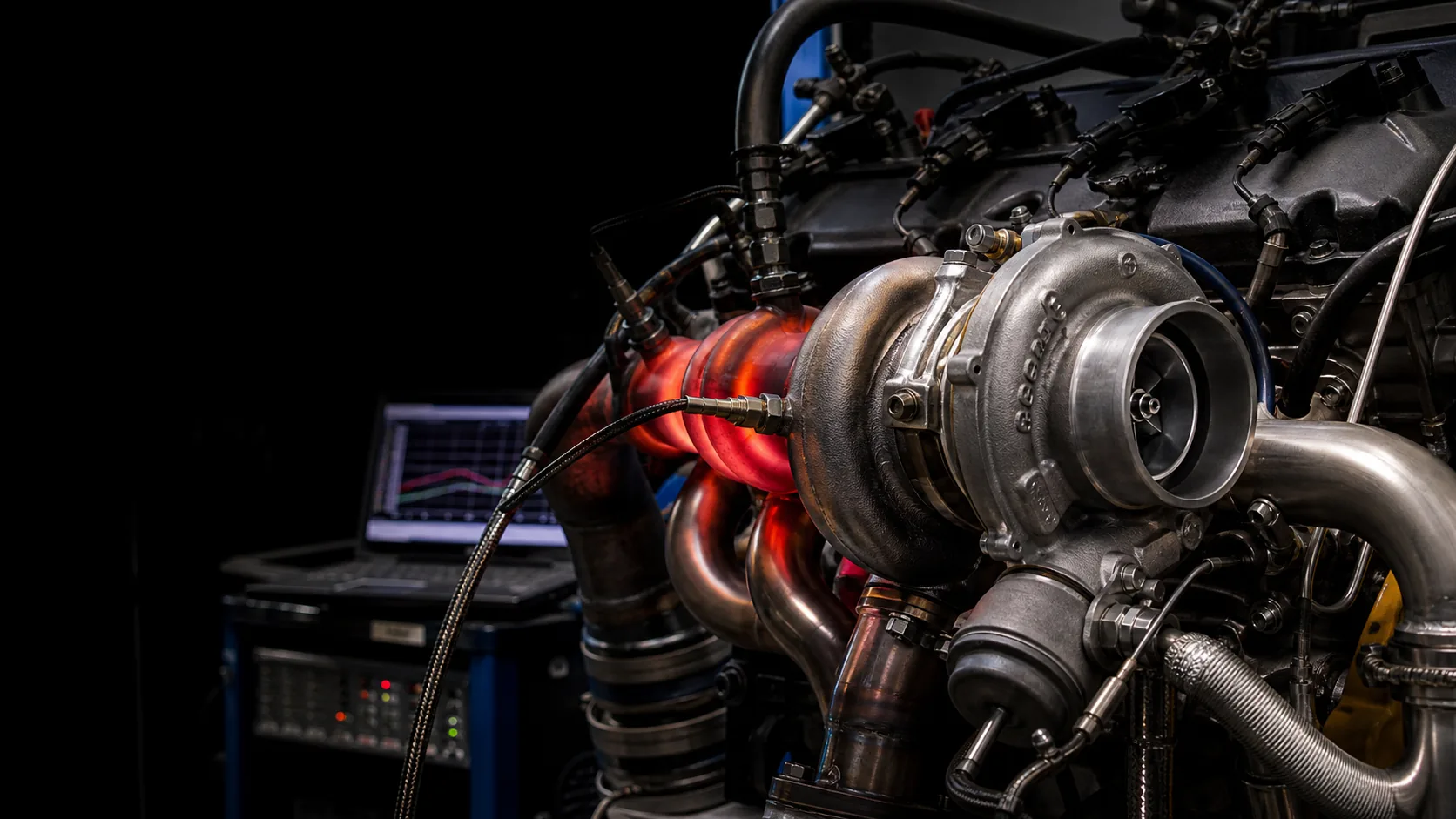
A strong calibration is not created by requesting more boost alone. Air mass, fuel, ignition or injection timing, lambda, exhaust gas temperature and mechanical limits must work together. EGT helps explain why an engine can feel strong briefly while carrying too much thermal load.
A turbo supplies air, not free power
The turbo uses exhaust energy to move more air into the engine. That air can support more fuel and torque, but compressor and turbine have an efficient operating range.
Excessive pressure demand can add heat, backpressure and turbo speed without delivering useful repeatable airflow.
Why boost alone is poor calibration
Boost must be checked against airflow, fuel pressure, lambda, temperature and torque modelling. Otherwise the ECU may intervene or the engine may run with unsuitable mixture, smoke or thermal load.
A controlled, repeatable torque curve is more valuable than one short peak.
Fuel and combustion
Diesel fuel quantity must match available air to control smoke and temperature. In a petrol engine, lambda, fuel pressure and ignition correction are central to combustion and knock protection.
Injectors and pumps have physical limits. Software cannot repair insufficient hardware.
What EGT tells us
EGT means exhaust gas temperature. It changes with load, mixture, timing, backpressure and duration of high load. Excessive temperature can stress turbo, manifold, catalyst and other exhaust components.
There is no single universal safe value because sensor position, engine and hardware differ.
Logging connects calibration to reality
Logs compare requested and measured boost, airflow, fuel pressure, lambda, corrections and available temperatures. They reveal overshoot, leakage, fuel shortage or heat that a brief road impression can miss.
For Stage 2 and modified hardware, NoordTune.nl uses diagnosis and logging to match software to the actual setup and intended use.
FAQ
Frequently asked questions
Does more boost always mean more power?+
No. Outside the efficient range it may mainly increase heat, backpressure and turbo stress.
What is a safe EGT?+
There is no universal figure. Sensor location, engine, turbo, materials and load determine what is relevant.
When is logging needed?+
Especially for Stage 2, modified hardware, repeated high load or when measured values and drivability raise questions.